
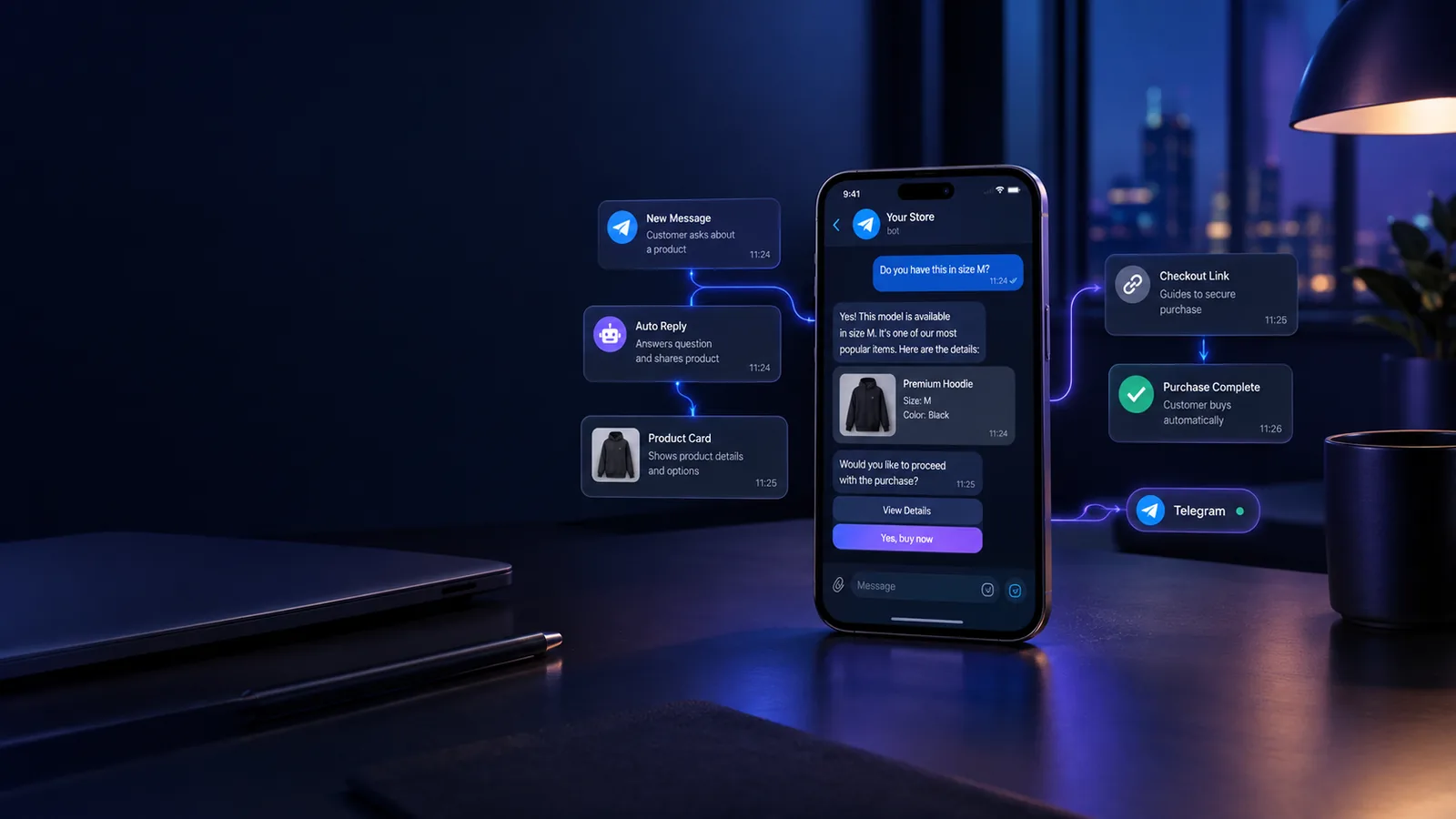
Every Telegram message, answered in seconds
Somebody taps Start on your bot at midnight and asks if you have it in stock. Before they put the phone down they have the answer, your real price, and a button to check out — and you were asleep.
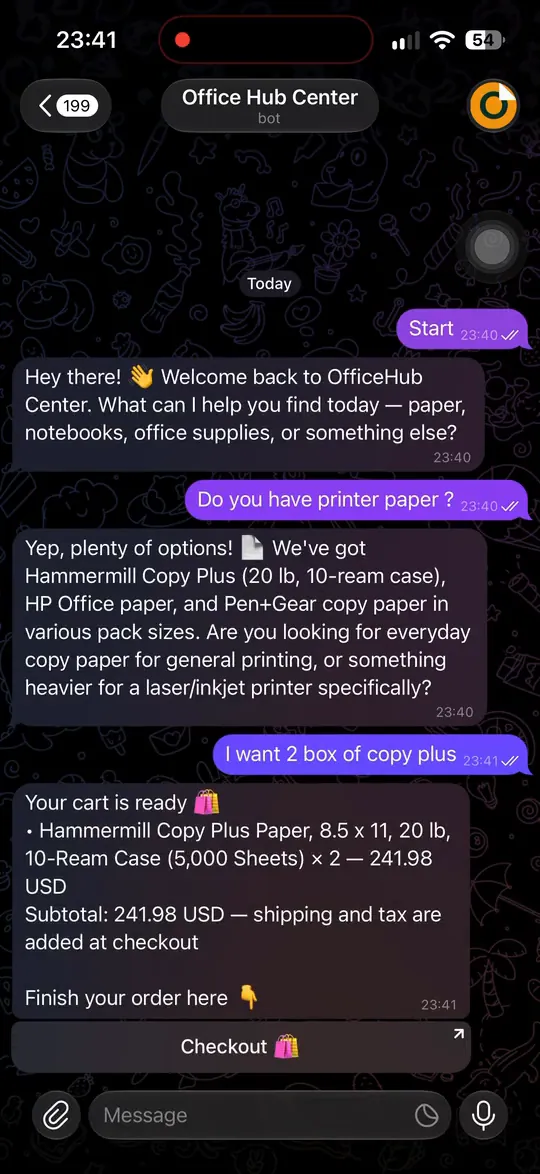
A customer opens your Telegram bot and taps Start.
Three taps, one sale
Your bot, your words, your store. It never says a price you didn't set.
- Step 1
They start your bot
From a t.me link in your bio, an ad, a post in your channel, or a button under your Instagram reply. One tap on Start and the conversation is yours to answer.
- Step 2
The answer is already there
A rule you wrote, or the AI reading your notes and your store, replies in their language — with buttons to tap instead of questions to type.
- Step 3
You step in only when it matters
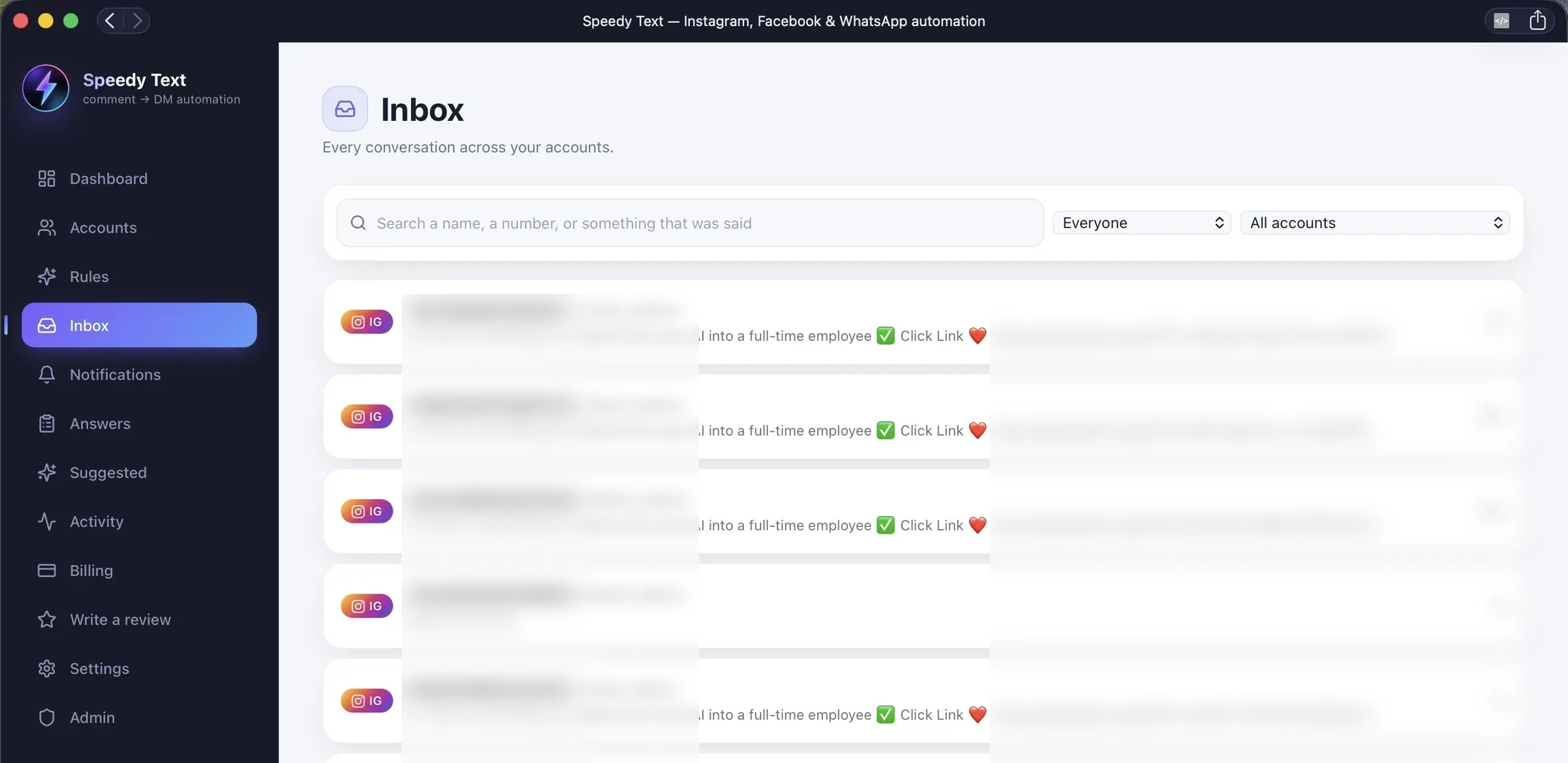
A question it can't answer comes to your inbox with the whole chat attached. Everything else finished on its own.
Three taps, one sale
Your bot, your words, your store. It never says a price you didn't set.
- They start your bot
- The answer is already there
- You step in only when it matters
The work that used to wait for you
The four things a Telegram shop does all day, done without anyone watching the phone.
“Do you have it?” — with the price
It names what you actually stock, at the price in your store, and suggests two or three when they're not sure. A figure you never wrote is never sent.
From question to checkout
“I'll take two” becomes a cart and a Checkout button that opens your own store. The money goes to you, not through us.
Comments under your channel posts
“How much?” under a post gets an answer underneath it, read from the post itself, with a button into a private chat where the sale happens.
News, to everyone at once
Telegram has no 24-hour limit. New stock or a sale goes out as one broadcast to everyone who started your bot — or only to the ones with a label.
What a good Telegram bot actually does
A bot is a different conversation from a person's account. People expect it to be quick and to give them things to tap — and they leave the moment it feels like a form.
- One link per ad
- t.me/yourbot?start=sale opens the exact flow you wrote for that ad. The person lands on the offer they clicked for, not on a menu they have to read — and you can see which ad brought them.
- Buttons beat typing
- On Telegram a button is one tap and costs nothing to read. Offer the two or three things most people want and a way to a person; keep long text for when they ask for it.
- Broadcast like it costs you
- It doesn't cost money, but every message nobody wanted is one step closer to a block — and a block is forever. Send news people asked for: stock, a price drop, the thing they waited on.
- Say who is answering
- A line like “instant reply — write ‘person’ any time” keeps people patient. They forgive a bot; they don't forgive not knowing whether anyone will answer.
The four that make a bot feel like a shop
Anyone can make a Telegram bot reply. These are what make it sell without embarrassing you.
Takes the order, not just the question
After the reply it can ask for the name, the address, the size — one question at a time, nothing else running while they answer. What they said is waiting for you in a list, not scattered through a chat.
Answers from your notes, and nowhere else
Write down your prices, your delivery areas, your hours. A question no rule covers is answered from that and only that — and a figure that is not in your notes gets the reply thrown away rather than sent.
Knows when to fetch you
Someone asks for a person and the automation stops talking, hands the conversation over, and stays quiet while you reply. It picks itself back up once the conversation goes cold.
Any language
Any language you can type, delivered exactly as you wrote it — no translation, no mangling, no character limits you didn't ask for. Arabic and English also switch on their own: write both and each customer gets the one they wrote in.
Put your Telegram bot to work.
Paste your bot's token and it starts answering. Works on every plan.